

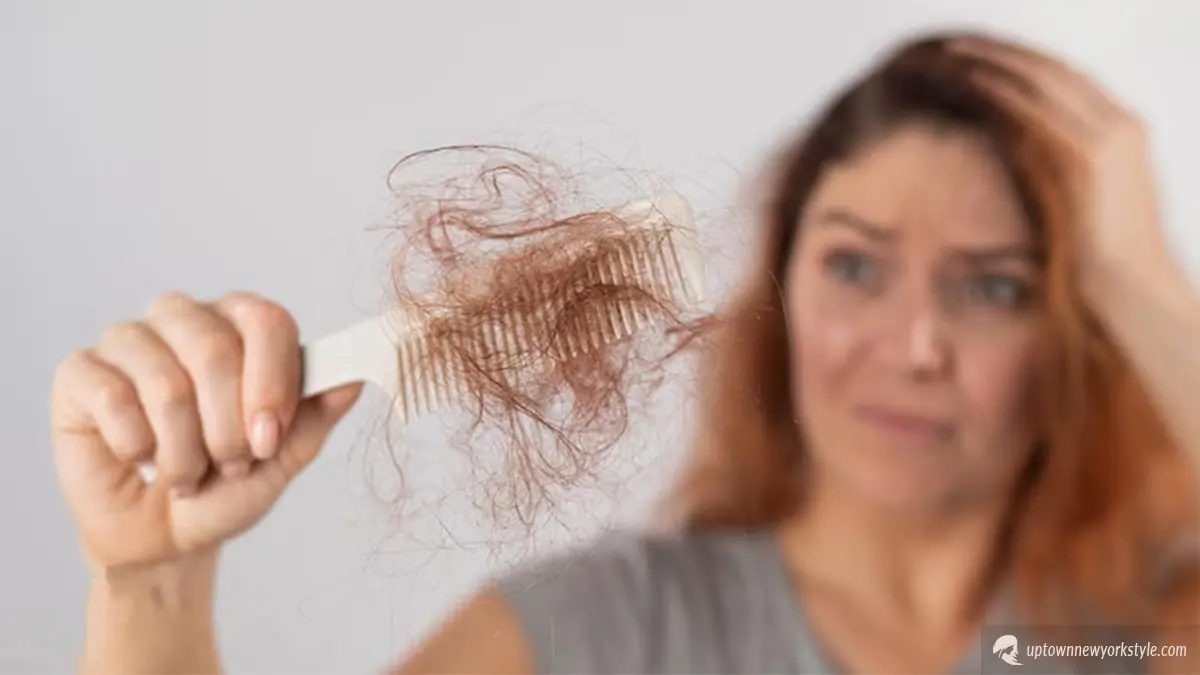
Whether men or women, hair loss is a distressing condition for many clients. Several years ago, a study concluded that a female makes an appointment to see a hair loss specialist when they have 50% of hair left.
There are many so-called female hair loss treatments. Instead of trying to debunk different treatments, we will briefly discuss the most common conditions and approaches for hair loss. While the information below is geared towards female hair loss, it may also apply to men experiencing hair loss.


What Causes Female Hair Loss?
The most common causes of female hair loss is androgenetic alopecia (female pattern hair loss), followed by telogen effluvium, and alopecia areata. This loss may be accelerated by lack of nutrients and iron deficiency. Medical conditions such as thyroid deficiency can also be contributing factors.
Female Pattern Hair Loss
Clients with androgenetic alopecia (female pattern hair loss) historically notice increasing hair shedding when shampooing or brushing their hair. Their updos such as a bun or ponytail has become less full and progressive thinning is noticed, especially over the crown.
Albeit it is normal to loose hair daily, most women begin to realize fairly quickly that the hair fall has increased and is not normal for them. If hair loss is caught in the early stages, it can sometimes be reversed. Of course, this depends on the female hair loss treatment, but generally hair appears thicker after 2-3 years.
Conversely, if the hair loss is significant, the most to expect is to slow down further shedding. Unfortunately, reversing the loss is much more difficult at this stage. However, before a dermatologist can recommend a female hair loss treatment, they must first do a thorough examination of your scalp. Doing so helps determine “why” you are losing your hair.
Scalp and Hair Tests
Some of the tests that may be required are:
- 1. Blood tests to exclude hormonal imbalances, nutritional, anemia or iron deficiency.
- 2. In some cases, before starting therapy, a biopsy of the scalp is recommended. It is important to exclude other causes of hair loss which would be treated differently.
Female Hair Loss Treatment
For less severe hair loss, your doctor may prescribe topical therapy. But if significant and rapid loss is detected, tablets may be recommended. It is best to see your dermatologist or doctor early on when you notice an increase in hair thinning.
Four Common Types of Hair Loss
1. Telogen Effluvium
Telogen effluvium is a common, usually temporary form of hair loss causing diffuse shedding. It’s often triggered by severe stress, illness, or hormonal changes. Generally, it occurs 3-4 months after a trigger, causing 30-50% of scalp hair to enter the resting phase and shed. In most cases, this form of hair loss is reversible, with hair regrowing within 6-9 months once the underlying cause is addressed.
2. Alopecia Areata
Alopecia areata is an autoimmune condition causing sudden, non-scarring hair loss in round patches on the scalp, face, or body. It affects up to 2% of the global population, and occurs when the immune system attacks hair follicles. This often results in smooth, bare spots. While there is no cure, female hair loss treatments like steroids, immunosuppressants, and JAK inhibitors can promote regrowth.
3. Traction Alopecia
Traction alopecia is a form of gradual hair loss caused by prolonged or repetitive tension on the hair follicles. For example, caused by tight hairstyles like braids, ponytails, buns, or extensions. It commonly causes thinning along the hairline but can affect any area. Typically results in scalp pain or small bumps. While early, non-scarring stages are reversible. But long-term, chronic tension can lead to permanent scarring and irreversible hair loss.
4. Trichotillomania
Trichotillomania, also referred to as hair-pulling disorder, is a mental health condition. It’s characterized by the irresistible, recurrent urge to pull out hair from the scalp, eyebrows, or other body areas. Classified as a body-focused repetitive behavior (BFRB), it often causes noticeable hair loss, tension before pulling, and relief afterward.
Final Thoughts
Remember, if you are experiencing hair loss, make time to see your doctor or dermatologist immediately to diagnose and treat it now. Some conditions such as telogen effluvium, alopecia areata and androgenic alopecia are all potentially reversible with treatment. If you have a hair loss problem, please call Cecelia Johnson at (858) 794-6833 or book appoint online.
You may also enjoy reading: Hair Extensions Solana Beach