

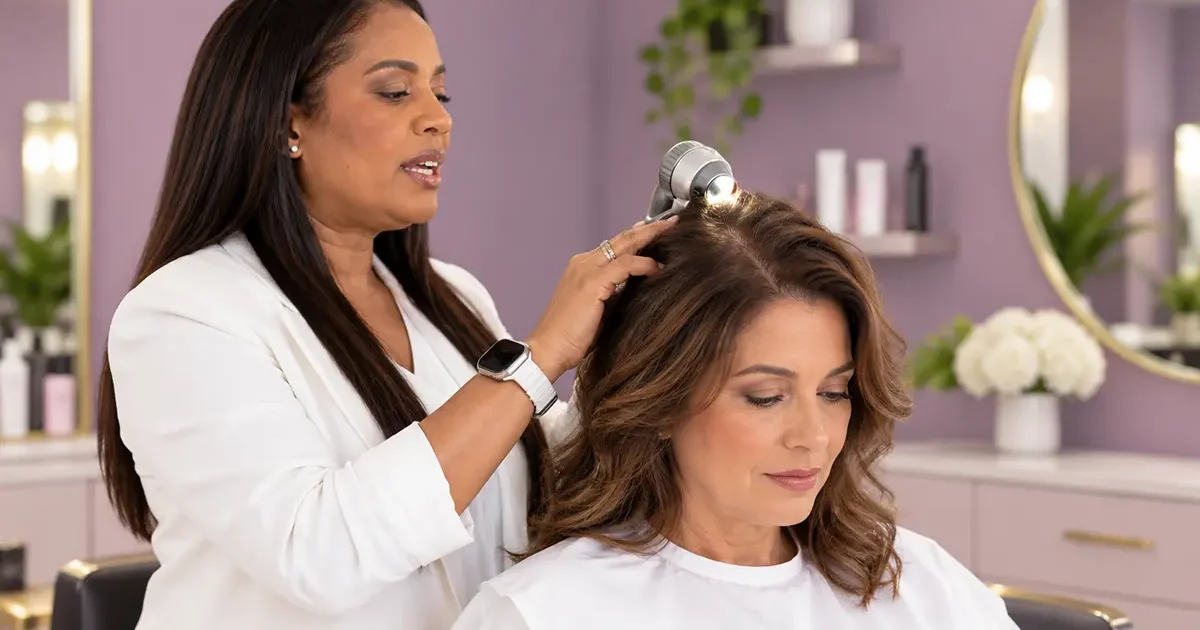
Thinning hair doesn’t mean you have to give up the beautiful, full hairstyles you love. Whether you’re experiencing hair loss around your edges, noticing less volume, or dealing with fragile strands, there may be styling options worth exploring.
A sew-in weave for thinning hair can create a fuller appearance, but choosing the right installation method is essential. At Uptown New York Style Hair Salon in Solana Beach, CA, owner Cecelia Johnson understands the importance of finding hairstyles that complement your natural hair.


What Should You Know Before Your Appointment?
First, can you get a sew-in weave with thinning? The short answer? It depends on your hair’s condition. Traditional sew-in weaves involve braiding natural hair into cornrows and attaching extensions using a needle and thread. While this technique creates beautiful results, the braids and extensions can place tension on delicate strands.
If your hair is already thinning, excessive pulling or added weight could make matters worse. That’s why a professional consultation should always come before your installation.
What Is a Sew-In Weave for Thinning Hair?
Before booking a sew-in weave for thinning hair, consider these important factors.
1. Hair Foundation
Your natural hair needs a strong foundation. Healthy hair provides the best foundation for extensions. If you’re experiencing significant breakage, scalp irritation, or thinning around your hairline, traditional braids may not be appropriate. A qualified stylist can evaluate your hair and discuss whether an alternative styling method would be safer.
2. Lightweight Extensions
Lightweight extensions make a difference. More hair doesn’t necessarily mean better results. Heavy extensions can create unnecessary tension, especially when your natural strands are fragile. Lightweight hair extensions may help achieve a fuller look without adding excessive weight.
3. Watch Your Hairline
Your hairline deserves extra attention. Thinning edges are particularly vulnerable to traction alopecia, a form of hair loss caused by repeated pulling. Avoid tight braids, excessive tension, and styles that constantly stress your hairline. If you’re already experiencing traction-related hair loss, a sew-in may not be suitable.
4. Maintenance
Properly maintenance is essential. Even a beautifully installed weave requires ongoing care. Keep your scalp clean, moisturize your natural hair appropriately, and avoid leaving extensions installed longer than recommended. Never ignore scalp tenderness, headaches, or pulling sensations. These can indicate that your hairstyle is placing too much tension on your hair.
Are There Alternatives to Traditional Sew-In Weaves?
Absolutely! Depending on your hair’s condition, other options may provide the fullness you’re looking for. Lightweight wigs, hair toppers, and certain non-tension extension methods can offer attractive alternatives. If you’re experiencing unexplained or progressive hair loss, consult a dermatologist before installing extensions. Understanding the cause of thinning helps protect your remaining hair.
Let’s Talk About Your Hair Goals!
Choosing a sew-in weave for thinning hair isn’t just about achieving a gorgeous hairstyle. It’s also about understanding what your natural hair can safely support. At Uptown New York Style Hair Salon in Solana Beach, CA, owner Cecelia Johnson welcomes conversations about your hair goals, styling preferences, and concerns.
Ready to explore your options? Contact Uptown New York Style Hair Salon to schedule a consultation and discuss a hairstyle that helps you look and feel beautiful while prioritizing your natural hair’s health.
You may also enjoy reading: Ethnic hairstyles that promote hair loss